|
You’ll often hear HR professionals say that they “fell” into HR. It seems to be a common theme. I’m super accident-prone (klutzy, unstable, wobbly), so “falling” always sounds accidental. When it comes to my career, there is no doubt in my mind that landing in HR was anything but accidental.
There was a time in my career, however, when I was at a crossroads. I was in a toxic environment. Leadership was shady at best – secretive, narcissistic, reckless (and yet somehow very deliberate), uncaring, controlling, micro-managing, manipulative, borderline unethical. Leadership squashed any attempt to improve communication, listen to feedback, or treat people as if they brought value to the organization. (I was often told that the only recognition people needed was a paycheck every two weeks.) Since that was the behavior that was modeled, employees acted in kind. The running motto, I kid you not, was “We eat our own.” (Sounds fun, huh?) I felt drained, exhausted, depressed, disappointed and completely spent. I thought, if this is what HR is, forget it. I had registered for the SHRM Annual Conference that year. I thought to myself, “I’ll go. If my passion for HR is refreshed, I will choose to stay in HR. If not, I’m out.” That year I leaned in and really engaged in the sessions. More importantly, I connected with people. I found the HR community on Twitter. I found Steve Browne (Master Connector, and Mr. Positivity). I learned that what I was experiencing, while sadly not unusual, wasn’t because of HR. I learned that my environment was toxic. I learned it wasn’t me. (It was them.) It was impossible for anyone to thrive in that environment. As one very wise co-worker friend (repeatedly) said, “We all have choices.” Yes. Yes, we do. I chose to leave that environment. Since then, I found the environment that feeds my passion for people, stretches me, and allows me to innovate and thrive. (I’m so glad I didn’t walk away from this profession!) HR is hard. People are messy. To be in this business, you must have a strength, personal resolve and commitment to bringing goodness with you every day. (Kate Bischoff talked about being loyal to yourself and your values in her most recent #DisruptHRBrookings talk. Watch and listen here.) You can choose to get sucked into a negative environment. Or you can choose to remain positive, and make a positive impact – on the business, on your team, on individual employees. And you can choose your environment. It isn’t a weakness to choose to leave when you know your environment is toxic (abusive). You demonstrate a strength of character when you know your self worth and capabilities, and know when you are limited in your ability to apply those capabilities because of something outside of your control. I’m not suggesting to shift blame. (It’s important to own your part and what you’re contributing – positive and negative.) What I’m saying is if you know you can’t thrive in your current work situation, maybe it’s time to consider another opportunity where you’re able to flourish. I have remained in HR because when I boil it down to one thing, I want the workplace and the work people do to be such a positive force in their personal lives that the sacrifices we each make to come to work 8+ hours every day (limiting time with children, significant others, loved ones, community, hobbies, etc.) is worth it. I love HR because I have the ability to impact every single person in my organization. HR is work. Some days it’s exhausting. I am driven by my genuine care for people and the unique value they bring to the workplace. Every day is different. Every day is a challenge. And every day is a reward. While I didn’t initially purposefully seek this industry out, the path I was on twisted and turned, as most interesting paths do. And I found myself in HR. I didn’t choose HR. HR chose me. #HRonPurpose #HRRising #HRLeadership #People #HumanResourcesProfessionalDay #HRShenanigans
1 Comment
WARNING: Long, honest and personal post ahead. If you are offended by f-bombs and some ranting, followed by (hopefully) an inspirational message, stop reading now and pull up some videos of puppies. DISCLAIMER: This is a personal blog post. All views and opinions represented in this post are personal and belong solely to me and do not represent those of people, institutions or organizations that I may or may not be associated with in professional or personal capacity. I have cancer. After a routine mammogram in January, followed by a series of diagnostic tests in early February, it was confirmed that I have Stage 1b invasive ductile carcinoma: breast cancer. I had surgery in April. And started chemotherapy on July 5th (the day I declared independence from cancer). Really, my oncologist and medical team wanted me to start in June, but I had SHRM19 to attend, and I wasn’t about to change my life’s plans. Want to know why? Fuck cancer. That’s why. Since February, only a few people have been made aware of my situation. I have chosen not to be public until now for a variety of reasons. I am not ashamed of it. I am not embarrassed by it. My lack of sharing is in part driven by the fact that most people, when you say you have cancer, change they way they treat you. I think that is mostly the result of not knowing what to say, or maybe the fear of saying something “wrong.” Usually what happens is they become uber-careful, compassionate, concerned, empathetic, etc. The funny thing is, I don’t want that. I don’t want that response so strongly that I’d rather avoid the conversation altogether – more for other people and less for me. SHRM19 was a pivotal time for me. I had no idea how I would respond to treatment, and thus the reason to postpone until I returned home. Heading out to Vegas was a reminder to me to eek out every ounce of goodness. Savor every interaction. Share words of encouragement for others going through tough stuff. Hug everyone who would let me. Smile and laugh so much that that would be what people remembered about me. Not only was I asked to be a #SHRM19Blogger (which is truly a special honor), but so did a few members of the #StatelineCrew, which made the experience even more fun. We took this photo together: 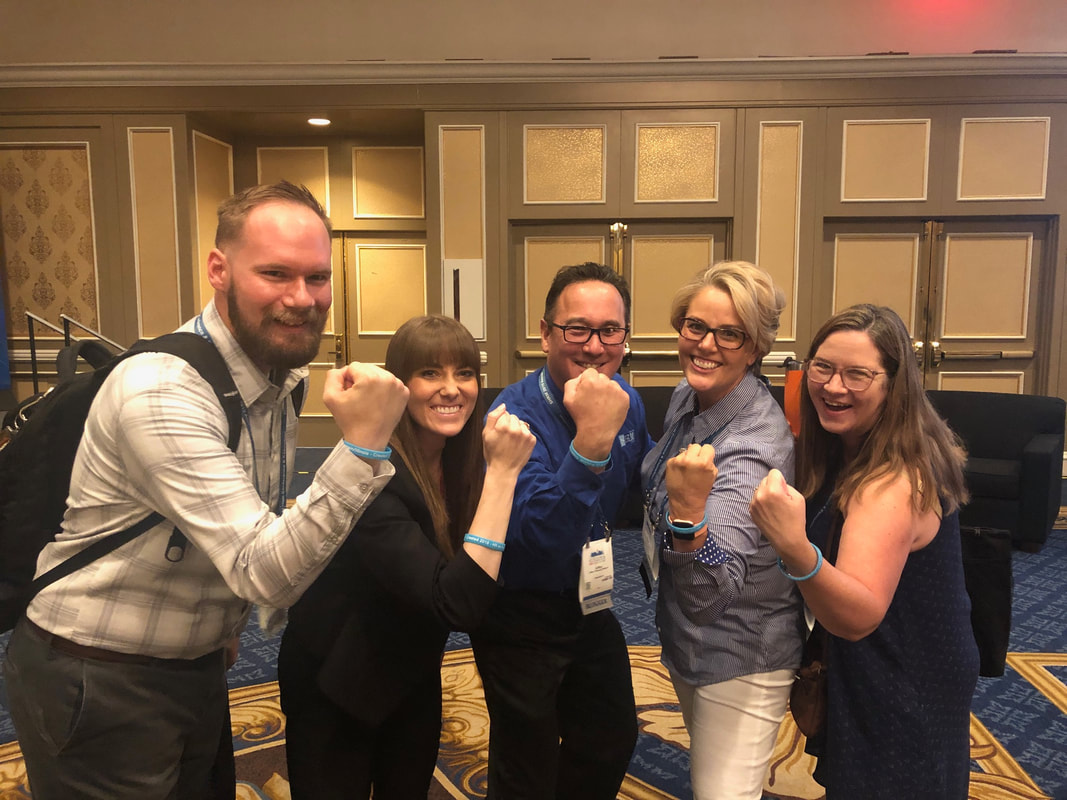 #StatelineCrew from Left to Right: Paul Lalonde, Callie Zipple, Jeff Palkowski, me, Mary Williams This photo was an expression of community and friendship which grew from a simple invitation to connect in a more meaningful way following SHRM18 in Chicago. Since that time, this picture has become a symbol of solidarity. Two of us pictured here are battling cancer. Boo. Cancer doesn’t define me. It isn’t who I am. It isn’t what I am. It’s something that I have to live with (for now), and deal with (now) so that (hopefully) I don’t have to deal with it at all in the (near) future. Truth be told: Cancer is scary as hell. Everyone has their shit to deal with. Every single one of us has hardships - finances, marriage, kids, friends or other relationships, employment, school, health, physical, mental, emotional, philosophical, etc. Everyone has a story. This just happens to be my mine. No better, no worse than anyone else’s. Most people have no idea that I’ve been dealing with this for the last 6 months. I’ve reported to work every day – missing only for the various (and numerous) appointments. When I chopped my hair a few months ago, most people have no clue that I did that to prepare for chemo, and the likelihood that I would lose my hair, and that was a small attempt at making it less traumatic. Baby steps. I chopped it again last Saturday as a result of chemo-related hair loss. I do have some hair… I’m kind of rockin’ an 80’s combover, which, frankly, I find hysterical. Assuming the hair loss continues, next step is a shaved head. No wig. No head scarves. No hats. When I tweeted about fear and courage months ago, most people have no idea that those tweets were borne from the cancer diagnosis, and my resolve to kick its ass. After all, I’m a mom of two young children, and as far as I’m concerned, there is one acceptable outcome. My father was 44 when he passed from cancer. I was 8 years old. I’m 46 now. My kids are 12 and 9. I know what it was like watching my father wither away. I was with him when he took his last breath. I know what it feels like to hear my friends talk about their dad and the fun things they would do together, watching them take photos with their dad before prom, at graduation, walking down the aisle at their wedding, when I sat there silently just wishing I had one more moment with mine. I have resolved that my children won’t experience that. Growing up without a mom isn’t an option for them. The primary reason I haven’t shared until now is because I didn’t want my situation to be a distraction. The irony is that I work for a company in the biotech industry – specifically early cancer detection. So why wouldn’t I want to be more open about it? See prior statement. I have learned a few things over the last several months. I have always come at life through the lens of gratitude, joy, happiness and courage. Even when the shit hits the fan, I look for the positive. I’m not one to wallow in misery, or curl up in a ball in the corner, retreat from life, and become a victim of my circumstances. There is not a damn bit of good that comes from that. When you hear the words “you have cancer,” that’s not an easy task. I have viewed my life as a training ground. Every single experience is preparation for something greater. The good. The bad. The horrific. The ecstatic. Life’s experiences teach you (if you’re paying attention) how to respond better each time. Years ago, when my husband and I were “family planning,” I had a miscarriage. It was devastating. As we were mourning, my husband said to me, “People are watching how you respond….” This was so powerful to me because it was a reminder that the way we respond to life has an impact on others. I am always mindful of what kind of impact I want to have: I want to be a source of inspiration, encouragement and support. Sometimes the way people respond have exactly the opposite effect. “To everything there is a season….” (turn, turn, turn…) Listen. There is a time to mourn. A time to be sad. A time to be scared. A time to be so pissed off you want to scream and punch someone in the throat. A time. A season. The point is that it’s ok to respond how you need to respond. Sometimes that response is so organic and raw that you literally have no choice in the matter. Nine years ago, I received a call from my sister that her husband stopped breathing. She called 9-1-1, and the EMTs were there performing CPR. I rushed to her house, saw him lying on the living room floor with a team of first responders clearly working very hard to save him, and ran to my sister’s side to hold her. Literally seconds later, one of the EMTs came over and said, “I’m sorry. He’s gone.” The sound that came out of my sister is one that I will never forget and couldn’t describe if I wanted to. It was primal. You can’t choose that response. There is a time for that response. The key is not to stay there, or allow it to envelope and paralyze you. I’ve also learned that there is a time to allow others to respond the way they need to, to my circumstance. Sure, sometimes people say stupid stuff like, “Oh wow… My mom had breast cancer… she died.” (Thank you for sharing. That wasn’t the slightest bit encouraging.) But that is the exception, not the rule. Most people express true concern and compassion. One of the most powerful and special moments at SHRM19 was at the North Central Region SHRM Networking event at Gordon Biersch Brewery. John Baldino, in the company of several of our colleagues, asked an interesting and insightful question about my recent haircut: “So tell me the story about your hair…” Simple. Harmless. Powerful. Why? Because in that moment I had a choice. I could choose to answer something to the effect of “I was just looking for a change…” or “summer hair” or whatever. Or I could choose to be honest. I chose honesty. In that moment, I shared my cancer diagnosis with a group of people who didn’t know. Their response was so beautiful, sweet and meaningful. A couple people stood in disbelief. Two cried. All allowed me the room and freedom to share how this situation has become a platform for a message of inspiration and resilience. Followed by a ton of hugs - which, if you know me, is my favorite. (I wish I had thought of the whole "free hugs" movement. What a glorious thing that is!) Community. A shared memory. Our stories converged. We connected. While people are responding to your news in whatever way they do, you have the opportunity for impact. 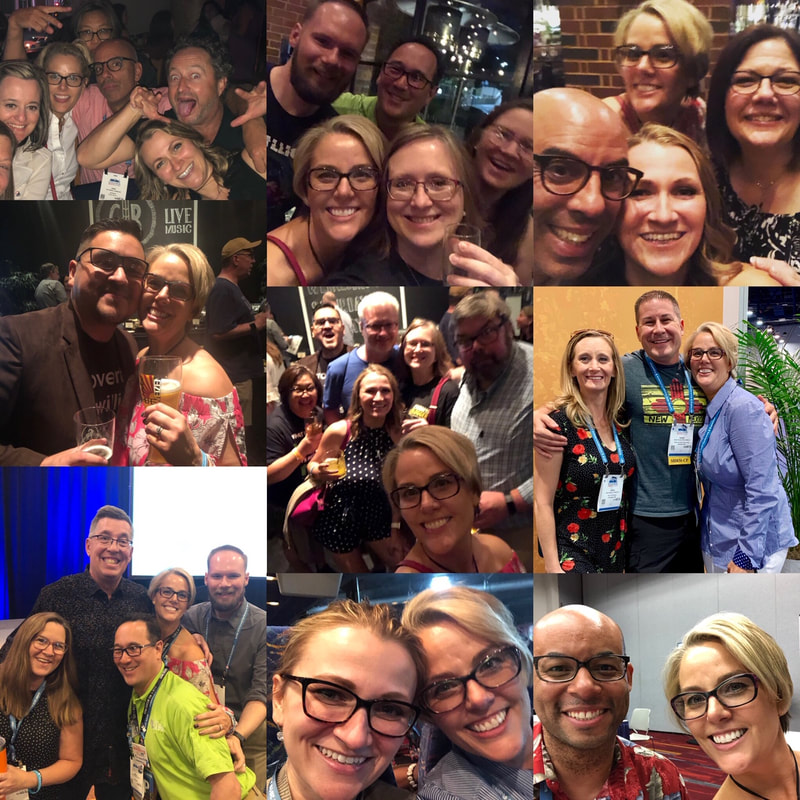 Some SHRM19 moments with the few "who knew." Enter beast mode.
To everything there is a season.. A time to weep, a time to laugh…. And there is a time to pull yourself up by the bootstraps, and prepare for battle. There is a time to share that even in the face of adversity, you can be courageous. There is a time to help people put things in perspective – what it means to choose joy and gratitude in the midst of suffering. There is a time to share your gratitude - for the amazing benefits that your company offers employees that make it possible to meet the financial obligations of very expensive medical treatments; for advancements in medicine and medical technology that allow us to detect cancer earlier, and allow us to make informed decisions about our treatment plan; for a leadership team who offers unwavering support, encouragement and flexibility; for (the few) employees who know your situation who are constantly amazed that you continue to show up every day (because you love your team and you draw so much strength and inspiration from them); for friends who call and send text messages during chemo treatments to help pass the time and to bring a smile to my face; for the HR Community and the #StatelineCrew who send words and gifts of encouragement; for friends who have paved the breast cancer road before you and who share their nuggets of wisdom, tips & tricks and "I am now cancer free" inspiration. There is a time for mental grit and resilience even when you’re experiencing excruciating and debilitating pain and exhaustion. There is a time to show compassion for those with silent disabilities because you now have experienced some of your own and realize quite readily how few disabilities are actually seen. I have found so many parallels from what I’ve learned through my breast cancer journey, and what we do in HR. It may be odd to say, but I am grateful for my diagnosis because it is making me a better person (wife, mom, friend) and a better HR leader. I am incredibly grateful for the opportunity to work with such amazing people who inspire me every day. So much so that even on my worst days, I want to report to work to demonstrate my commitment to them, and my support of the incredible work they do. Cancer has changed the way I engage with people. For the better. Those who know me know I am not one who is easily kicked down. Cancer screwed with the wrong girl. Cancer hasn’t taken over my life, nor will I allow it to. My life continues on its trajectory – filled with fun plans, house renovations, SHRM conferences, connections with my #HRPals, morning walks with my son, evening snuggles with my daughter, and future planning with my husband. In between all of that, I am being treated for breast cancer. I’ve gone all Spartan on this thing and it doesn’t stand a chance. Because now is the time to fight. #FC #StatelineCrew #HRPals #SHRM19 #SHRM19Blogger #HRonPurpose Benefits, wellness programs, medical insurance/coverage - so much ugh! These topics can be quite tough for even the seasoned HR practitioner. As medical insurance premiums continue to rise, more and more employers are cutting benefits - increasing out of pocket maximums and deductibles, reducing networks, cutting coverages altogether. What's infuriating to me is how many HR practitioners look to their brokers as the resident expert on the subject and don't spend enough time truly understanding the benefits landscape and other creative ways to build a benefits package without having to cut important benefits and also **gasp** save the company money. This particular topic is a painful passion of mine. I say "painful" because, no offense, dear colleagues, but HR professionals are woefully uninformed, uneducated and ill prepared to provide solid leadership when it comes to benefits. There. I said it. There are many wonderful broker-partners who truly do look at the relationship with their business client as a partnership and have both the company and their employees' best interest in mind. But, mind you, as is often the case in business, incentives, commission structures and bonuses can be quite persuasive, and can distract from what should be done versus what can be done. This is not where I go on a diatribe about brokers, commission structures, and showing up once a year at renewal - I'll save that for another post and another time (when I'm feeling particularly snarky). Suffice it to say, having the right partners is critical. I implore you. Taking the time to understand medical insurance coverage, healthcare (**ahem** spoiler alert - health insurance and healthcare are not synonymous), the healthcare supply chain, what is actually driving healthcare (and insurance) costs, how claims are paid, differences between fully insured, level-funded (or "partially self-funded") and self-funded (self-insured) options, what preventive healthcare really is, and other benefits that you can implement to augment your plans will vastly improve your company's bottom line, and I would strongly argue, your employees' health outcomes, as well. Once you have a better understanding of how all of this works, you'll be in a much better (and stronger) position to identify benefits consultants, strategists and brokers who will partner with you to bring strategic, innovative, cost-saving and outcomes-focused solutions to your business. I was so excited when I found the session "Strategic and Nontraditional Steps to Bend Your Company's Health Care Curve," with speaker Dr. Wade Larson. While we haven't had the chance to speak in person (yet), I feel like I found a kindred spirit in this space. I couldn't wait to connect with Dr. Larson on my questions and share his incredibly insightful and important answers with you: Stop saying “Someone oughta” and start saying “I’m gonna”. Q1) What is the biggest challenge for companies when looking at their healthcare and health insurance plans? Understanding the REAL contributor to the problem. The primary driver of healthcare costs for ANY employer is CLAIMS. If an employer can control claims, they can control costs. And where do claims come from? Employees going to the doctor. This is the key. Now, how do you control this? There are three fundamental principles that can help an employer get to the point very quickly: a. Healthy employees don’t get sick, and they don’t go to the doctors. We want them to go to the doctor for preventative care, but that is not what drives up the real healthcare costs. When employees are healthy, they are also happy and that drives of productivity, increases profitability, decreases absenteeism, and reduces turnover. Employee wellness is not just a good thing to do for healthcare – it MUST be a strategic initiative for the business. b. Employees need to understand that health insurance works the same way as car insurance. (Most employees don’t understand this.) There is a reason why we don’t speed and we don’t wreck our car. When we speed and we get a ticket, our car insurance rates go up. When we wreck our car, our health insurance rates go up. Well, when we wreck our bodies, and we go to the hospital for expensive procedures to fix them, the claims are paid, and those affect the rates which go up for the following year. If we don’t go to the hospital, because we are healthy, we don’t incur claims… And when we don’t incur claims, not only do we save that money, but our rates are not impacted for the following year. Interesting. c. When employees are treated like partners, they start to act like partners and they start working for us. Businesses don’t have a problem sharing the risk when times are bad. We pass along costs to employees when the rates go up. But are we willing to pass along the rewards when the rates go down? Are we willing to share in the profits when they help us contribute to the solution? Are we willing to disproportionately reward those who are part of the solution over those who are part of the problem? When employees can see that their efforts can result in a reduction of cost, and that reduction of cost puts more money in their pockets, they get excited very quickly. When more money gets into their pockets, they become stingy with that money and they start becoming better consumers of healthcare – including taking better care of themselves so they don’t have to spend that money on healthcare. If your broker shows up only once a year at renewal time, it’s time to fire your broker. Q2) HR is often woefully uninformed when it comes to benefits plans. They often rely on their broker as the expert. Do you feel that this is effective? If not, what can HR do to help drive strategic healthcare decisions for their company? I agree. HR needs to become informed and educated itself, but it also needs to form a dream team of expert consultants. Having the right consultants and brokers is essential. Let’s talk about who needs to be on this team to make it work and their roles and responsibilities. HR expertise: If HR is not conferencing, and this means specifically to healthcare conferences or national conferences that are specific to healthcare related topics, they’re never going to get it. Look – healthcare is the second most expensive line item on the books. It is typically worth millions of dollars a year to manage. If the only time we manage this is during open enrollment, then we are acting like fiduciary imbeciles. We need to take care of this multimillion dollar account year-round. This also means that we need to become instructed on best practices and ways to manage the solution. SHRM National Conference has great solutions, as do several of the regional and local events around the country. HR MUST remain current in their education. This requires them to go to these conferences and seminars regularly – not just once year. Brokers: If your broker shows up only once a year at renewal time, it’s time to fire your broker. That goes without question. A broker needs to be a trusted partner that works for you year-round. They are not going to do that on their own. As HR professionals, we need to push them and drive them to create solutions for us. We need to ask them questions and make them do their homework. Personally, I use Mercer because of the strategy that I get from them. However, I also use a second broker – YES, I have two brokers. Mercer is my go to, and the second broker offers some services that are “out there” that are not very conservative but offer me some different solutions that I can’t get through Mercer because they are cutting edge and too new. This creates something of a tension much like Yin and Yang. It’s fantastic. While there is a little bit of competition between the two, it also keeps everybody on their toes. This way I have both of them working for me year-round. Vendors: If the only time I hear from vendors is around open enrollment to pitch me new products, they don’t help me very much and I am not interested in their services. I have things going year-round with my employees. I need partners, not just a one-time solution. Part of my going to conferences is the trade floor. No, I don’t fill my swag bag full of crap. Sure, I’ll grab a pen or two but not stuff my bag full of useless stuffed animals and squishy things. I hit the trade floor to see what is out there. I look to see what services are available, what is new and thriving, and look for new solutions that can help me streamline benefits management and offer new options that can drive performance of my plan. Q3) Companies often only review their health plans once each year - maybe 2-3 months prior to their plan renewal. When is the best time for HR to start thinking about, and considering changes to, their healthcare plans? The best time for HR to start thinking about changes to their health plan is the day after the last open enrollment. As soon as you’re done with starting the year off, it’s time to start thinking about the next year. In fact, as we build one year, we are often thinking ahead of what we are going to do the next year. We think in terms of multiyear strategies. There are some things that we want to do, but in order to manage the change process, we may have to implement it over the course of two years. Remember – as soon as the renewals calm, it is too late to change anything from the past. I cannot magically change my claims from the previous year. When I open the envelope, it is all about mitigation and negotiation. If I am fully funded [fully insured], I’m at the mercy of the health insurance company to negotiate my rate down. If I am self-funded, it is all about assessing risk and setting price points that demonstrate fiduciary responsibility. Looking ahead, I CAN influence behavior changes among my employees. I can help them stand how to make better choices as consumers of healthcare, I can help them recognize opportunities to go somewhere other than the ER for primary care, I can offer substantial incentives for them to remain healthy, I can offer alternative solutions such as incentives for medical tourism and pharma tourism, etc. I can’t change the past – that I can change the future, and that future changes as quick as I do. I don’t have to wait for years to make change happen. Q4) Often, companies feel that the only way to make "healthcare" affordable is by increasing deductibles and out of pocket maximums. Why do you think this is this problematic? This limiting thought process is what got us into the trouble that we are in. At least, it is partially why we are in the trouble that we are in. Because of this mindset, many employers have passed along premium increases, gutted the coverage that our health insurance will actually cover, increased deductibles, and increased out-of-pocket maximums. The result? Employees are paying astronomical prices out of each paycheck for health insurance that doesn’t cover much, requires an annual deductible that you will never reach unless something catastrophic happens to you, includes an out-of-pocket maximum that is almost the same size as your deductible, and does not allow the employee to get the healthcare that he/she or the family needs or can afford. Why is this a problem? Let’s say an employee has an HSA (Health Savings Account) plan with a $6,500 deductible, times two deductibles for the family deductible on the plan. That means that before the employee can actually use the insurance coverage for which he is paying $500 per month, he will need to pay a total of $6,000 in premiums per year ($500/mo x 12 months) + $13,000 in deductibles ($6,500 x 2) for a total of $19,000 before he rolls into any kind of benefits “coverage”. If the employee is a typical employee with an occasional medication and doctors visit, it’s likely that he will never benefit from his benefits. In fact, because of first dollar costs while trying to meet the deductible, there is a really good chance that the employee will just not go to the doctor when he should and may stay home instead. So despite having insurance, the employee won’t use it, will get sick and stay sick for longer, will miss work, and will likely come to work being sick and spread it to others in the workplace. Q5) What do you mean when you use the term "sick care"? How does this perspective impact a company's employees? “Sick care” is all about mitigation. We are simply talking about reactive medicine – how to “fix” what ails us after the fact. It doesn’t talk about preventive medicine or the wellness component of preventing bad things from happening in the first place. Sick care talks about mitigating the cost of the $55,000 that it will take to fully replace a knee through the local hospital system (all costs taken into account including the hospital, the orthopedic surgeon, the anesthesiologist, etc.). Sick care strategies are all about managing costs – and there is some of that that is important, such as bringing in medical tourism where I can send somebody across the border for the same surgery to replace the knee for $20,000 all costs in. But what if I could avoid replacing the knee altogether by helping the employee to lose 100 pounds? What if the reason that the knee needed replaced is because the employee is over 300 pounds? What if I could help them lose the weight in their 40s through our wellness program for a few hundred dollars which then prevents us from having to replace the knee later on? Or the back surgery? Or the cancer that will come as a result of poor health and eating habits? By taking a holistic approach to healthcare, we take both mitigation (cost control) and prevention into account to attack the costs from multiple angles. Q6) How can a company address healthcare costs, focus on preventive healthcare (rather than sick care), without busting an already tight budget? It’s about priorities. Do they want to spend next year’s money on healthcare increases? That money can go to Blue Cross or you can spend it today on preventive efforts including building a gym, wellness incentives, lunch and learn programming, incentive platforms, materials that you create yourself and distribute, videos that you develop yourself, etc. We have a fully engaged group that does this as a part of the rest of their job as well. We only have a staff of three in HR. The key is to identify, recruit and engage your wellness committee from throughout the organization. As they become ambassadors of wellness, and they help promote the activities, they will take on leadership roles and begin to run the functions. You don’t have to do it all. In fact, if HR is running the whole thing themselves, this will fail. The more you engage in, the more you can get people excited to participate, the easier this will be to work. Engagement and participation across the board is essential. This CANNOT be an HR event. It MUST be an employee program that engages from the ground up. Q7) What is the #1 thing you hope the attendees of your session will take back to their workplace? At least one useful strategy to embrace, take back, and try to do one or more of the following:
I am so giddy about this session, I can hardly contain myself!! This topic should be one of the top priorities for companies. There is so much money to be saved in your benefits plans if you take the time to educate yourself, and then engage the right partners.
Thank you, Dr. Larson, for this incredible information. I am beyond thrilled to share this and truly hope that your session is standing room only. Please join Dr. Wade Larson for this session, Strategic and Nontraditional Steps to Bend Your Company's Health Care Curve, on Wednesday, 6/26/2019 from 10am-11am in LVCC N201-204. Please also connect with Dr. Larson on LinkedIN and Twitter. Years ago, my husband and I found ourselves in a place where we felt completely disconnected. We longed for meaningful relationships with the people around us. For all of our efforts reaching out and doing everything we could to engage our community, they just weren’t reciprocated. We started to wonder if it was us, or them, or something else altogether. I wrote several blog posts on this topic (which ironically, caused further separation). Making a long story short, we ended up moving to another state. And almost instantly, we found our community. In fact, such deep community and connectedness that we have become hyper-sensitive to those around us who are experiencing loneliness. The reality is that loneliness doesn’t end at work. It doesn’t necessarily begin there either. But because most of us (at least those of us working 40+ hours per week) spend the majority of our waking hours at work and with our coworkers, that loneliness tags along with us, and can have a profound impact on how we engage and perform. 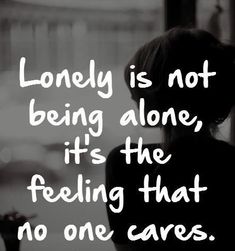 Thus, I find the SHRM19 session Workplace Loneliness Is Killing Us, presented by Stuart Chittenden, founder of Squishtalks, to be of great interest. What does it mean to be lonely, how is loneliness manifested at work, and what does that mean for the workplace? A couple of weeks ago, I had the pleasure of connecting with Stuart: Thank you for speaking with me today! It’s truly a pleasure to meet you and get to know more about you and, specifically, this session. First, how did your business get the name “Squishtalks?” About 9 years ago, my wife and I started hosting conversation salons in our home. We wanted to have a structure for conversation at a meaningful and deep level, but also one that was allowed to go wherever it wanted to go. We structured it so that we could fit 13 people around our kitchen table at a “squish.” The name just kinda stuck. About three years ago, I exited the partnership I was in, which was a branding and marketing consultancy. I felt the need to respond to this calling to see if this conversation thing could be a consultancy that could pay the bills. So I set up this business, and I kept the name Squishtalks. The camp is divided. Is it absurd, and ridiculous, and undercuts the seriousness of why people pay me? Or does it excite so much curiosity that it is appealing? Thus far, the jury is still out. That is fantastic! What was the catalyst for making that move from branding to more of the leadership and conversation style salons you would have? It was a combination of outrage, midlife crisis, and responding to some calling in my life beyond myself. Just turn the news on. Robert Putnam, Political Scientist, talks about our communities being characterized by a shriveled sense of “we.” Just look outside your door. Our social fabric is fraying. I was hitting middle age and I thought, “Is this all there is? And what am I doing to support this?” At that point, I thought the strength I have is using conversation as a way for humans to connect with each other. And I figured if I was going to respond to this calling and indulge the midlife crisis in a positive way, this is what I need to do. I’m not a researcher in loneliness. And there is no training vocation school where you go to get a qualification as a conversation expert. It’s a subject that I think is relevant. It’s funny to think about HR professionals turning to me and asking “how do I do this?” In many ways, I kinda want to say, “I don’t know. It’s kinda like just being a human… Do the human thing…” What were the factors that led you to speak on the topic of workplace loneliness? A cliché, perhaps, but modern society and contemporary workplaces are beset by forces hindering our ability to connect meaningfully at a human level. Maybe I am a little too romantic, yet I am hoping to contribute to the building of stronger, healthier relationships and organizational communities. How would you define workplace loneliness? Loneliness may be defined as the subjective feeling that you lack meaningful relationships or a solid support system. It can be distinguished from being alone, which isn’t necessarily unwelcome for us, depending upon the context. Also, loneliness is not necessarily caused by isolation or exclusion. However, while precise, in some ways these definitions and distinctions don’t aid the general practitioner or layperson seeking to address loneliness. In that sense, I find it helpful to consider that loneliness is an emotional state of feeling apart from others. Do you think that workplace loneliness is a relatively new phenomenon, or is it something that we're just now talking about? As long as humans have formed communities and societies, we have also been subject to the experience of loneliness. It has been talked about in other eras, although the language and cultural context may not align with what we encounter today. Prof. Amelia S. Worsley at Amherst has written about this and suggests that in the 16th and 17th Centuries loneliness related more to spatial concepts, being away from other people and civilization and instead in the wilderness. Worsley arrestingly observes that modern loneliness has moved inwards and that “the wilderness is now inside of us.” Modernity, however, has a different kind of spatial concept wrought through technology. We struggle with this at a human level. How we connect as people and cohere as societies has not kept pace with the facilities afforded by technology. I don’t know why loneliness is being discussed more now, but will offer my opinion for discussion. I’ve mentioned technology, which has fulfilled its promise to enable connectivity, but has not delivered on its promise to amplify connection at a meaningfully human level. There are the pressures to be authentic and empowered, yet most of us are unable to cope with the demands that such perfection requires, all the while trying to give the appearance of perfection. Then there are the modern forces – politics, media, socio-economic inequality, racism, bias, and so on – that are widening rifts between communities. More positively, we are de-stigmatizing issues relating to our mental health and wellbeing, which is a welcome shift in our cultural discourse. What are some of the ways that HR can identify workplace loneliness in their companies? On a practical level, I am not aware of any specific assessment tool that HR practitioners can discern a benchmark of loneliness. Engagement assessments with some customized questions may offer a viable alternative in the short term and are already visible and credible in the field. Beyond that, while it may sound cynical, HR should consider starting with senior leaders because, first, that is typically where there are more resources, and, secondly, where HR can get organizational buy-in. It’s really about organic connection. We come hardwired with this ability to connect with other humans. The truth is there is no simple “one, two, three” that works. What I would suggest is there are principles of conversation that can be brought into the culture. And the way you do that first is by modeling it, and to provide skill building around it. Embed it into training and development programs. Teaching people what some of the principles of conversation are: Curiosity, empathy, listening and courage. One of the questions that is asked on Gallup's Employee Engagement Survey is "Do you have a best friend at work?" Why do you think this question is so important, and what do the responses reveal to the company in relation to workplace loneliness? I’ll let Gallup respond to why that is such an important question. This article of theirs is especially relevant, it seems, and includes a statement by a Gallup researcher that you are lonely if the score to this question is low. It also includes this assertion: “'I have a best friend at work’ proved to be the wording best able to discriminate between groups in which friendships are sufficiently supportive and those that have only surface relationships that are unable to withstand adversity.” What is one of the ways that HR can have the biggest impact on addressing workplace loneliness? The answer is not mandated “fun” nor forced socialization. What I am suggesting as one way, and not exclusively, is authentic conversation. It is an art that we all have the capacity for and which enables us to encounter others and to be encountered. What would you say to the business owner and/or leaders who say that it isn't our place to concern ourselves with this topic? “Are you a human?” Although that is obviously too flippant. I am willing to bet, though, that a business owner or leader who is unconcerned about this issue likely has a workplace characterized by loneliness. If they have dysfunctional teams, siloed thinking, low engagement, little creativity, or high turnover, they might wish to reconsider. If they expect their people talent to fully show up in all their potential then this is an important issue. For the HR professional, we have to ask, are we there to serve the people? Or are we there to serve the hand that feeds us? That’s where the discomfort comes from. What is the #1 thing you hope attendees of your session will take back to their workplace? That a culture of connection achieved through authentic conversation will not only alleviate loneliness and its ill effects, but will amplify wellbeing and performance. I want to thank Stuart for the wonderful conversation! I hope this information sparks your interest in learning more about workplace loneliness, and some ways you can begin to build meaningful connections through conversation. Join Stuart at his session Workplace Loneliness Is Killing Us on Monday, June 24, 2019 from 1:30 PM - 02:30 PM. To learn more, click here: https://annual.shrm.org/sessionplanner/session/25148/workplace-loneliness-killing-us
To learn more about Stuart Chittenden and Squishtalks, visit his website at: https://squishtalks.com/. Warning: Long post ahead. #sorrynotsorryThe countdown has already begun for the 2019 SHRM Annual Conference & Exposition - in Las Vegas! I am giddy with excitement this year! Of course, I’m giddy every year. (Ok. I’m giddy every day… Don’t judge.) I’m particularly giddy to attend this year for good reason. I was invited to participate as an official #SHRM19 Blogger! How fun is that?? Before I dive too deep into this post, I invite you to meet and connect with this year’s #SHRM19Blogger squad: Creating Better Workplace - Meet the #SHRM19Bloggers. There are a hundred reasons why I look forward to attending every year. But let me take a step back for a second and paint a picture for you. I’ve been attending this conference for years. And every year I see and hear things that make my heart sad, and make me wonder why some people choose HR as their profession. I hear things like “the session was boring” and “there are too many people” and “the coffee line is too long”. I find it incredibly ironic that we HR pros for years have been trying to unlock the secrets to creating positive workplaces. And yet, here we are, complaining. We know better than anyone in our organizations that you can’t please all the people all the time. So why are we choosing to be on the negative side of the coin. Stop it. Just stop. Let's first make sure our attitudes and behaviors support our efforts. I’m reminded of a quote from the movie Wyatt Earp. Doc Holliday (played by Dennis Quaid) said to Wyatt Earp (played by Kevin Costner): For some people, this world ain’t ever gonna be right. Check out the clip here. Listen up, HR Pros. The conference is what you make it. It isn’t every speaker’s job to ensure that you walk away with 10 golden HR nuggets – at every session. At the end of the day, this is your career. Your development. You take away what you choose. I’m sure you can find just one thing useful in every session you attend. But that is up to you. It is, indeed, a very large conference. SHRM18 in Chicago broke attendance records, and drew 22,000 attendees. So you will have to navigate through crowds, which I realize is a challenge for many people. And, yes, the coffee line is super long at the conference center. So plan ahead and don’t wait to purchase your coffee there. But if you do, don’t be a grumpy butt. See all those people in front of and behind you? They want coffee, too. And, likely, they want it pretty tout suite. Wouldn’t it be something if you started some conversation and helped make the long wait more pleasant? I know that for many people (like myself), it’s energizing to think of all the possibilities that a conference this size holds. The vendors. The speakers. The bookstore. The Smart Stage. The learning opportunities. The networking opportunities. Connecting with old friends. Hopefully making new ones. All the awesome HR gear. And. So. Many. People. I mean, com’on. Just soak that up. For some of us, when we enter a room of hundreds (thousands) of people, we just revel in the goodness of that energy! (My giddy is showing!) For many others, especially as a first time attendee, whether it’s 160 attendees or 16,000, it can be quite overwhelming. In order to prep you for a conference of this magnitude, I want to share a few action items that can help you make the most of your conference experience - before, during and after. Here's a countdown of 5 ways you can gear up, have a great conference, make amazing life-long friendships, and continue to build that momentum long after the conference is over. #5: Be courageous. I have thought a lot about fear and courage lately. We all know people who let fear dictate their next move – or lack thereof. Fear, if you let it take hold, will stunt your growth. Franklin D. Roosevelt once said: Courage is not the absence of fear, but rather the assessment that something else is more important than fear. Think about that for a minute. Courage is not the absence of fear. That means you can be fearful, and yet still be courageous. (**mind blown**) A couple of weeks ago, my family and I watched a documentary called “Free Solo.” (Highly recommended.) It’s about Alex Honnold who climbed Yosemite’s 3,000 foot granite cliff El Capitan without ANY ropes or safety equipment. None. I watched the whole thing between my fingers. I wasn’t even there and it scared the poo out of me. (Not literally…) People like him have a different perspective of fear. They are able to control and use fear - become hyper-focused, confident and prepared. Sure he was scared. And he did it anyway. If I’m being honest, I spent a good portion of my early career hanging out in fearful places. Rather than let fear act as cement, I learned to use it as a source of motivation to continue to stretch and explore the unknown. I’ve learned that fear is usually my guide. If I feel fearful, that usually means I’m on the right path and something extraordinary is about to happen. Sometimes fear can be exhilarating! (I call that the “Wee Factor.” It’s that moment when you realize how FUN fear can be!) But it does take courage to keep moving forward. It is not unusual to be fearful of large, unfamiliar places, filled with unfamiliar faces. I get it. Many people are simply uncomfortable around strangers – even more so 16,000 of them. Do it anyway. Use that fear as a motivator for you to try something new. Embrace the fear, and step out with courage. The moment that little voice inside your head starts throwing out fear statements, or tries to convince you not to do X, shut it down. YOU are in control of your thought pattern. If you live your life in a place of fear, it’s high time you start writing a new narrative. #4 Build Your Professional Network It took me far too long to understand the power of a strong network. For some, networking comes naturally (**ahem** Steve Browne). For many others, networking is terrifying. (Please refer to #5.) There are a ton of books, blogs, articles and podcasts you can read and listen to to learn how to network. The big aha moment (and the moment networking became fun) is when I learned that the more I give and serve, the more I get back. The kicker is that I never give for the purpose of getting. It’s that this miraculous thing happens when you give: You receive. A starting point prior to heading out to SHRM19 is to log into SHRM Connect, click on “Groups,” and then find the SHRM19 Annual Conference Community. If you are traveling to Vegas solo, this is a great place to start making connections NOW. You will find people posting as a first time attendee asking to make connections. Post one, too! Make plans to meet up – for coffee, lunch, dinner, cocktails, dancing, site-seeing, WHATEVER. Plan a dinner somewhere and post how many dinner partners you’re looking for. You will be shocked (and pleasantly surprised) at how many others are in the VERY SAME PLACE you are! The reality is that people want to connect. Let’s not do this introvert/extrovert labeling BS. The most introverted people in the world still want connections with other humans. And the most extroverted people in the world still need down time. Everyone wants to belong. Be intentional about those connections. How many times have you attended a conference or a Chapter meeting, you sat at a table of strangers, introduced yourselves, exchanged business cards, and then the moment you return to the office, you either throw the business cards in a desk drawer, or worse, in the trash? Spoiler alert: That’s not networking. If you do some networking prior to the conference, once you get there, intentionally connect with those people you’ve been networking with. That conference center jam-packed full of thousands of people will feel a whole lot smaller when you see a familiar face or two. During and after the conference, follow through on the connections you made (and continue to make) with others. Be sure to exchange contact information. Make a plan to connect in person (if local), or by phone call, or better yet, through Zoom or other video conferencing. (Claire Petri is a master at this! Anytime I connect her with someone new, I know that on the short end of that introduction is a Zoom call. It’s brilliant!) I’m not suggesting that you need to make every person you meet your new BFF. What I’m saying is be the kind of person that others know they can count on – whether for great content, sound advice, knowledgeable counsel, or another connection. One of the most powerful tools in your HR toolbox is your network. The HR Community is chalk-full of amazing, smart, innovative, experienced professionals. On top of that, most people want to help others. We want to see others succeed. Be the kind of professional that helps build others up. What a legacy!! #3 Find a mentor We have so much to learn. Wherever you are in your career, there is zero chance that you know everything there is to know. Sometimes we all need a nudge. We need someone to impart wisdom – to help us make decisions (which very well could be life or career altering), to help guide us when we find ourselves in unfamiliar territory, to share experiences and knowledge where we lack one or the other, or both. I am not a teacher, but an awakener. Mentors are teachers, or as Robert Frost said, awakeners. (Ooo, I love that!) We all have greatness inside of us. Mentors can help to unlock and unleash – awaken – that potential. Mentors can be the conduit between mediocrity and extraordinary. They can be the boost we need to be courageous in the face of our fears (see #5). They are the ones who lead us to truth. Or in some cases maybe just encourage us to recognize the truth we already know and give us just the right kick in the backside to muster the courage to do something with it. (Future blog post on this topic...) #2 Be a Mentor One of the best ways to learn is to teach. You do not need to be someone with 20 or 30 years of experience in order to teach others more junior than yourself. All of us have experiences we can share with others. That is one of my favorite things about the HR profession. I am continually impressed by the number of young professionals entering this field, and the level of passion, creativity, innovation and knowledge they already have to share. Find one that you can mentor and help guide and shape, and in return, you will learn oh so much. The delicate balance of mentoring someone is not creating them in your own image, but giving them the opportunity to create themselves. #1 Intentionally Find And Build Your Community Life was meant to be experienced together. We aren’t meant to walk alone – personally or professionally. Iron sharpens iron. It takes a village. Community is a natural result of consistent presence and intentional relationship building (see #s 4, 3, and 2). When we build relationships with the professionals in our network, when we teach and are taught, connections begin to have more meaning. We build friendships. We find the people with whom we share more intimate details of and the struggles in our lives. Community isn’t limited to a number, or to a certain radius of miles from your work or home, or to the individuals with whom you have the most in common or happen to be most like. Community is what you make it. It can be as large or as small as you feel comfortable. I have found that the more I invest in people, the more I am intrigued and interested in who they are, and the more excited I am to draw them into my community– like gravity. Choose your community. Choose them well. Choose to pull closer the people who make you better. Nurture those relationships.  Here's a picture of one of my communities: The #StatelineCrew. More details on that in a future post. I love these people. My Tribe. My village. My friends The SHRM Annual Conference is an opportunity to expand your community, be challenged and stretched, and take purposeful steps towards a more meaningful career. This year, decide ahead of time what you plan to get out of your attendance and how you plan to bring all of that back with you to help create better workplaces. Start now. Even if it scares you, do it anyway. If the thought of 20,000 people in one spot stresses you out, come anyway. If you don’t have a mentor now, find one anyway. If you feel like you have nothing to teach, mentor anyway. If you prefer to keep your community small, build relationships anyway. Then follow through - during and after the conference. After all, we are in the business of people. For another great list of conference tips, I want to give a shout out to fellow #SHRM19Blogger and #StatelineCrew #HRTribe pal – and dear friend, Jeff Palkowski. Jeff and I met in person at #SHRM18 in Chicago. Prior to heading out, he had created this super fun Bingo card, which he enthusiastically branded SHRM-O. I don’t want to steel his thunder, so head over to his blog: HR Sushi Bar. He does a wonderful job of providing great tips for attending #SHRM19 in Vegas. A Case of Déjà Vu All Over Again. PS – My #1++ conference tip is to wear comfortable shoes! Ladies, this is NOT the time to sport your brand new 4 inch pumps. You will regret it within the first 30 minutes....
Sometimes technology isn't all it's cracked up to be. Texting can be a challenge. On many levels. Autocorrect can be a nightmare. (If you want a good laugh, visit Damn You Autocorrect! Disclaimer: Website may contain content that may not be appropriate for all audience members. Viewer discretion is advised. Additionally, please follow your company's policies on appropriate use of the internet. Ideally, you should be off the clock, off work premises and off your company's wifi/server, as well as not using your company's devices. You have been warned.) I cannot tell you how many times I have experienced text missteps. And a few doozies! ("Deck" sounds awfully like another word that starts with "d" and ends in "ck".) Luckily, I generally ("generally" is the key word here, folks) work with people who have a sense of humor, don't take things personally, don't get easily offended and otherwise have a pulse. So I have yet to find myself in a professional predicament due to texting failures. And before you ask, yes, I have experienced some work-related trouble for really stupid non-work related things, like boxed wine and photobooths. (Ooooo, feathered boas are so offensive!) Those are for later posts. #HRShenanigans) I really enjoy the people I work with. We have so much fun at work (and outside of work, I might add) - which is very refreshing after having experienced some pretty dismal work environments in the not too distant past. We laugh. A lot. And this is supported by leadership. **GASP** I know. I know. One of the things I find myself looking forward to are the emails and text messages from my boss. He frequently uses the talk to text function on his phone, which creates some really interesting content. And what's better is when he sees it, but rather than correcting it, he leaves it as is, and more clearly enunciates so you get the original translation, followed by the corrected translation. This amuses me. Here's an example: (I didn't get his permission to post this. I hope I don't get fired.) 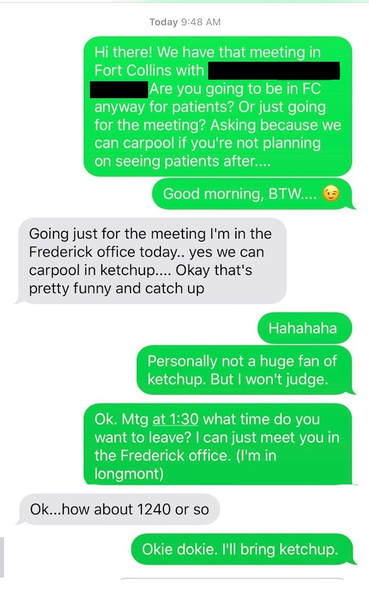 People, listen up. I don't care what industry you work in, what title you hold, or what professional standards you feel the need to adhere to. It's ok to make mistakes. And it's ok to laugh about them. I really feel strongly about creating a work environment where people can be who they are, and where laughter is a prominent characteristic of the work culture. If you're so uptight that people can't share in laughter for fear of the punishment that follows (i.e., the "talking to"), I encourage you to re-evaluate your work culture. Bunny Trail: Remind me to tell you about the time my husband received a verbal warning for "being too happy at work." 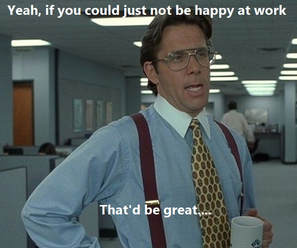 I'm not kidding. That sounds like a fun workplace, doesn't it? "Welcome to Fuddy-Duddy Insurance Company. We're glad you're here. But not too glad. In fact, we prefer that people aren't too glad about anything. Grumpiness and frowning are encouraged." Please don't be a stick in the mud. Be the kind of person, and more specifically the HR practitioner and/or business leader that people look forward to interacting with. Positivity and joy are contagious. Feel free to spread fervently. From there to here, from here to there, I’ve always been a fan of keeping options open. I like choices. Just because you may not actively be seeking other employment, if you’re contacted by a recruiter, what does it hurt to explore the opportunity he/she presents to you? You can always say no. But what if it’s a fantastic opportunity? Or your dream job? How would you know unless you looked into it a little further? Recruiters and hiring managers may be reaching out to you hoping to woo you away from your current position with a more challenging role, a different type of role altogether, better compensation, a more robust benefits package, retirement plans, stock options, and/or additional perks – such as a more flexible work schedule, the ability to work from home, unlimited vacation, paid volunteer time off, etc.. Maybe you’re working for a great company, but you're not so happy with your current position and/or duties. You don’t feel challenged. The work doesn’t inspire you. The duties are just plain tedious and aren’t working your strengths. Or maybe you’re really great at those duties, but they make up 90% of the job, and you just plain hate doing them. Maybe you would be happy in your current position if it weren't for _____ (fill in the blank). Your supervisor/manager is a narcissistic, egotistical jerk. There are toxic people on your team that the company seems to hold on to for far too long despite your sound advice and counsel. There is a complete lack of accountability, integrity, transparency. Leadership doesn’t behave in alignment with company values. The compensation isn’t aligned with the competitive market range. The benefits package is lacking. The work impedes on your ability to be present in your life outside of work – lack of flexibility and/or paid time off. Literally, this list is endless. If you’re in this type of situation, I think it’s time to really consider whether or not you’re in the right position and/or right company. First, you can’t control others. You can only control yourself – your thoughts, feelings, behavior, responses, etc. Second, with that in mind, you have a decision to make. Here are your options:
If you’re that unhappy in your current role/company, take the necessary steps to look for a role that better suits you and meets your needs. There is absolutely no point in continually complaining about the company, the team, your boss, the position, the whatever. Notice that there wasn’t a third option: Stay and complain. This is not an option. I totally get that there are often a lot of things to complain about. But the question is, can you do anything about them? If you can, what’s stopping you? Maybe you have done everything you can to influence positive change, but in the end you aren’t the decision maker, and the decision has been to keep things status quo. Bummer. Or maybe the direction of the company just isn't a direction you want to go. What are you going to do? HR Pros, I implore you. Do not get sucked in a negative space. The role of HR is critical in a company. Your job is to demonstrate appropriate behavior, positive interactions and attitudes, and be supportive - whether through change or staticity. It’s super easy to vent. But BEWARE. Your attitude, disengagement, frustration and anger are felt by those around you. They’re little seeds that you’re planting. Your garden will grow accordingly. The seeds you plant affect others’ ability to work and engage in their respective roles. Negativity breeds negativity. Toxicity breed toxicity. Don’t be a part of that cycle.  I’ve seen people so angry and frustrated with their manager or company that they throw gigantic fits. They tell people off. They purposefully try to sabotage the work of others, or possibly destroy documents or their own work product because they don’t want the company to have it, or the manager to take credit for it. I don’t understand this whatsoever.
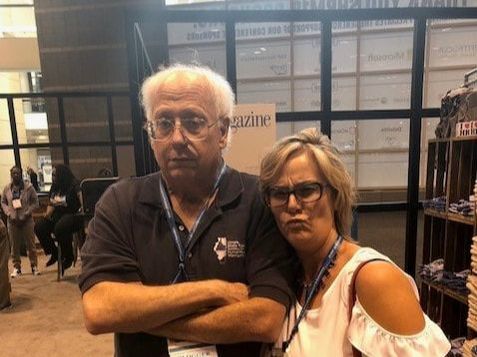
Several years ago, I worked for an organization that was wrought with toxicity. People were horrible to each other. Leadership was secretive, immoral and unethical. Rumor-milling, bitching and drama were the norm. I found myself increasingly frustrated with the lack of accountability and the lack of alignment between the values posted on our walls and accepted behavior and performance. Why was this even allowed? One of the senior leaders said it best: “We all have choices.” Yes, we do. If you choose to stay in your current role with your current company, with all of the things that you disagree with, stop complaining. Stop the drama. Stop fault finding. Stop blaming others. Look at yourself. Be disciplined enough to be self-aware, self-reflective, and accountable. Your fits of rage and the words you spew ultimately reflect more poorly on you. Sure, you could get in the last word and hurt others in your revenge. What does this accomplish? I’ll tell you: Nothing. Nothing except a sad tale that others tell. (Remember the "Who's coming with me?" scene from Jerry Maguire? Yeah…. Don’t do that.) If you choose to stay, accept what it is, and continue to put in your best effort in influencing the positive change you believe is right for the employees and the business. And do so with joy in your heart. You are not a victim of your work circumstances. You can, in fact, choose to engage with a positive attitude and encourage others to do the same. And if you choose to leave your current position – for whatever reason – leave well. Don’t burn bridges. (After all, it’s a small world. Word gets around if you’re a pill.) Don’t make it your duty to write a long dissertation about everything that’s wrong with the company, the boss, your supervisor, your team, other employees, etc. The words you choose are a reflection of YOU and your character. Take what you have learned, and use it to help refine who you are as an HR professional and as a person. People, there is enough negativity in the world right now. We each have the ability to choose the thoughts we indulge, our behaviors and our response to others and our circumstances. No one can make you do anything. It is your choice. If you are indulging negative thoughts, which lead to negative behaviors, stop it. Please. Stop. Your choices are a reflection of your character. Think about that. Your choices are a reflection of your character. Who are you? How do you want others to perceive you? How do you want others to feel after interacting with you? What legacy are you leaving? What do you want to be remembered by? Whatever your answers are to those questions, leave in a manner that agrees with them. Every once in a while, you meet someone with whom you instantly connect. Someone who just "gets" you from day one. Sure, you may meet a lot of people, but not everyone is a kindred spirit, someone you feel you have known on a transcendent level for far longer. I met John Jorgensen at SHRM17 (New Orleans), in the SHRM Bookstore (of course), and I knew instantly that we would be buddies. Maybe it was the grumpy exterior but twinkly eyes. Maybe it was the bear hug he gave me 10 minutes after we met. Maybe it was the deliberate way he stayed in contact with me throughout the conference that year. Whatever it was, from that day until now, hardly a day goes by when we don't have contact - even if it's just a wave on Facebook Messenger. Literally. Every. Day. Today is John Jorgensen Day. And for right reasons. John has been instrumental in the HR community for... I don't know... since TRex and the Personnel Office. He's been around the block a time or two thousand. He's an avid SHRM volunteer, and was even referred to as the "Godfather of the modern HR movement." (I love Laurie's post because it demonstrates the impact knowing John can have on your professional career. I also love Mary Faulkner's post because it highlights some of the more personal aspects of John.) Growing up, my grandfather (Pappy) referred to himself and his group of theologian pals as The Curmudgeons. Pappy was full of joy and laughter, always looking for an opportunity to play a joke on someone, and always a source of kindness and love for his community and those around him. Some of my earliest memories are of him whistling everywhere he went. When I was a wee lassie, I thought “curmudgeon” was a word he made up. I eventually learned the definition of curmudgeon in maybe Middle School (I’m guessing). It confused me. Pappy was far from grumpy and surly. To me, “curmudgeon” has always been a term of affection.
As curmudgeony as he may appear on the surface, John is one of the most kind, tenderhearted and sincere people I’ve ever had the privilege to know. Today, I won’t go into detail about John’s wealth of HR (and life) experience and wisdom. I won’t pontificate about his incredible intellect, love for knowledge, history and music. What I want you to know about John is he is an exceptional friend, and a remarkable human. We can talk about football (although he’s a college fan, I’m an NFL fan), puppies, yard work, insomnia and beer. We can argue about whether beans in chili redefine it as soup. We have supported one another in sadness and loss of loved ones. We have celebrated successes and coffee. Every once in a while, something will get him going. And I love being on the receiving end of those rants. He is genuine and marvelous. John is the kind of guy I wish was my neighbor. Sincerely. I imagine scenes from Home Improvement in the back yard having conversations over the fence. He’s someone I have come to deeply appreciate and adore on so many levels. He has strong opinions, and is happy to share them with you. He’s a straight-shooter, and calls ‘em like he sees ‘em. Most importantly, John is a giver. A giver of his time, resources and insight.
Today, we celebrate John Jorgensen, for all he has done, and continues to do, for the HR profession and our community. And we celebrate John for being the kind of friend we admire, trust and respect. A lovely curmudgeon. Happy John Jorgensen Day!
Employees face some hard things in their personal lives. Somewhere along the line, we decided that people need to leave all of that at the door when they report to work. I have no idea where this became the expectation, but this is just silly. You cannot expect your employees who are dealing with incredible personal challenges to be able to switch all of that off when they walk in the door. To think that we can pretend that all of that isn't happening for 8-10 hours a day is ridiculous. Especially in this "bring your whole self to work" movement, we need to understand that the stuff going on in personal lives will, in fact, affect the work life to some extent or another.
Failing marriages. Miscarriages. Drug use. Elderly and ill parents. Car accidents. Deaths (family members, friends, pets). Financial hardships. Cancer. So many tough things that we all face in our lives. If you're practicing HR well, you should know by now that you need to be present with your employees. This requires abandoning your office frequently, and working where your people work. Belly up in an area where employees basically have to interact with you. And, ya know, talk to them. If you haven't been doing this, start now. It may seem weird at first, and certainly employees will wonder "WTH?" But over time (and it happens quickly), as you engage in chit-chat, employees will start to open up to you, about their business concerns, their opinions about the company, coworkers, managers and leaders. They will also open up to you about their personal challenges.
And here's the kicker. Don't just ask, "Is there anything I can do for you?" This is a very well-intentioned question. I would like to believe that when people ask this question, they really mean it. The problem is that when people are dealing with incredibly difficult, emotional issues, the last things they are thinking about are ways that others can help them get through it. In fact, most of the time, people don't even really know what they need. On top of that, if they are even remotely Type A, they would never dream of asking for help because this shows some sort of weakness and they are accustomed to pulling up their big-person pants and just getting through it. (Although, in secret, they are struggling, stressed out, losing sleep, crying in the bathroom, etc..)
Want to know how you can help? Show up. Be there. Offer some flexibility in their work schedule. Help them get connected to the right professional (counselor, financial adviser, elder care resources, fill in the blank....). If the issue is related to a medical challenge, talk to them about FMLA and/or the other leave options they have available to them. Explain whatever other benefits they have available - short term disability, bereavement, etc. Allow them to emote without fear of losing their jobs. Bring them a token of kindness that shows you empathize and you're there for them. If you have a close relationship with your team and employees, maybe even consider showing up at their house to help mow the lawn, clean the gutters, do laundry, drop off a few freezer meals. The ways you can show up are literally endless. And, shhhh, you can even offer them a hug. **GASP** I know... crazy talk that we in HR would ever think about physically touching an employee. (You really do need to know if this is ok. Because there are people who do not like to hug, and that needs to be respected.) There are ways to do this that don't make people feel uncomfortable or make you look like a creeper. But let me tell you, I've had grown men who seemingly have their shi.... stuff together in my office crying like a baby. And, yes, I offered a hug. Yes, they took me up on the offer. And, yes, I've had a shoulder full of tears. (And, no, there wasn't anything inappropriate about this.) Personally, I think this is a beautiful moment. It demonstrates the impact you have on others when you just listen, empathize, and give them a safe place to express the mess in their heads and hearts. It's amazing to me just how many people need a hug, as evidenced by how they lean in, and how tightly they hold on. I think we need to put our constant fear of being accused of sexual harassment aside to allow ourselves as humans to offer a very human expression of empathy - if you are comfortable with it and it is appropriate. (I feel like I should write a disclaimer, but you know what I mean.) The point is, be present and available. Be the HR Pro that your employees know they can trust and with whom they can share their personal struggles. Don't steer clear. Show up.
A Word About EAPs
These programs can be very valuable. HOWEVER, you need to know and understand your employee population. Not all EAPs are created equal. In fact, if you're in a first-responder environment (firefighters, police officers, paramedics, EMTs, ambulance responders, rescue workers, emergency room and/or trauma-related medical teams, etc.), likely you need to really evaluate the EAP offerings. I could write several posts on this topic alone. This is a population that deals with things that most of us will never see in our lives - and they see it on the daily. Refraining from going into graphic detail, these employees have different needs, and require a completely different level of emotional/mental support. Not only is this population even less likely to ask for help, they are exposed to horrific, awful, terrible, violent, unfathomable situations. This is an environment where you may want to consider a formal peer support program where employees are trained to identify certain behaviors, and become a safe place for peers to turn as a bridge to mental or behavioral professionals. If you are an HR professional in one of these environments, and you're interested in learning more, please contact me. I can provide you with several resources to help you develop and implement a peer support program that very well could mean the difference between life and death for your employees. Recently, the question was posed on Twitter... "Why do you work in HR?"
This is an important question for everyone to ponder. (Side note: Everyone should consider this question, not just those of us in HR. I think everyone should know why they work in a specific field.) Many of us landed in HR as a freak accident. Some chose it specifically. Some slowly dipped their toes in the water somewhere along the way, perhaps they were responsible for some basic ancillary HR duties as part of another role, and eventually made their way out of the kiddie pool. Whatever the reason you're here, the question isn't necessarily why do you work in HR, but why do you continue to work in HR? HR isn't for everyone. Working with people, their choices and behavior can be extremely exhausting. Let's face it. We've probably all had conversations with grown adults that sound eerily similar to the conversations we've had with our four-year-olds. "There are consequences for your actions... We all have choices to make... Stop hitting and biting." At some point in our careers, many of us come to the moment of truth. That being the moment when we become so dismayed, disappointed, exhausted, and, frankly, hurt by our organizations (leaders, co-workers, peers) that we just don't know if we want (or even can) continue. I came to this place a few years back. The environment I worked in at the time was incredibly toxic. Unethical and immoral behavior, it seemed, was rewarded. The culture was so toxic that everyone had this "every man for himself" mentality purely for survival. Complete lack of transparency, accountability and honesty. Employees were mean-spirited, spread malicious gossip solely intended to harm reputations and destroy credibility. The CEO would make comments like "100 people are standing in line for your job. If you don't like it, leave." Working in an environment like this takes its toll. (I'll spare the sordid details... but many of you, I'm sure, can relate.) Every year I could, I would attend the SHRM Annual Conference. This particular year, I decided that if I didn't come away from the conference feeling reinvigorated for my field, I would change careers. I decided to dig in, be present, make connections, and really think about the field I had chosen for my profession. What happened was actually quite amazing. Not only did I come away feeling energized and refueled. I also came to the realization that while we may have every good intention to be an advocate for employees, develop and implement amazing onboarding, training and development programs, and help build a culture of trust that allows employees to bring their whole selves to work every day and be highly engaged in the mission, vision and values of the business, the truth is that not all organizations are healthy enough to allow you to operate that way. This particularly year, I realized that the employees of my org were basically taught that "to eat our own" is the MO. THAT was the culture. So... I made a plan and eventually resigned. And it was one of the best decisions I have ever made for my career (and my sanity). I realized that HR wasn't the problem. Even the employees weren't really the problem. The organization and it's leaders who allowed that type of culture to exist were the problem. Why am I in HR? I’m in HR because it’s the one place in business that I believe we can have the greatest positive impact on people’s lives. We spend the majority of our time at work. We have the opportunity to make the work experience not just good, but GRAND! Do not let others steal your joy. In other words, don't let other people, situations, or organizations rob you of the love you have for your chosen field. I urge you to consider that maybe the environment you're in is the main culprit, and not the field of HR. I'm not suggesting pointing fingers or blaming others for your choices. (I mean, really, maybe you're part of the problem.... Self-reflection is a really good habit to get into.) What I'm saying is this: Take ownership over your choices. You know when you're in a toxic environment. Humans have this really cool thing called gut instinct that, if we listen, can tell us a lot. If you are simply unable to rise above all the crap that is around you, don't give the org any more power over you! If you know you're in the wrong environment (like a toxic, abusive relationship), then start taking the necessary steps today to find another position and resign. Think back to the reasons why you got into HR in the first place. Write them down. Ponder them. If, after all of that, you do decide to leave HR, that's ok. Again, maybe it is not an ideal field for you. But if you decide that HR is where you should be, then make a plan to leave your organization. And when you do, choose to leave well. (We'll talk about that in a future post.) HR is an incredibly rewarding field. Everything we do impacts people. Don't let toxic environments determine your future. |
Let's connect!Archives
September 2023
Categories
All
Archives
September 2023
|



 RSS Feed